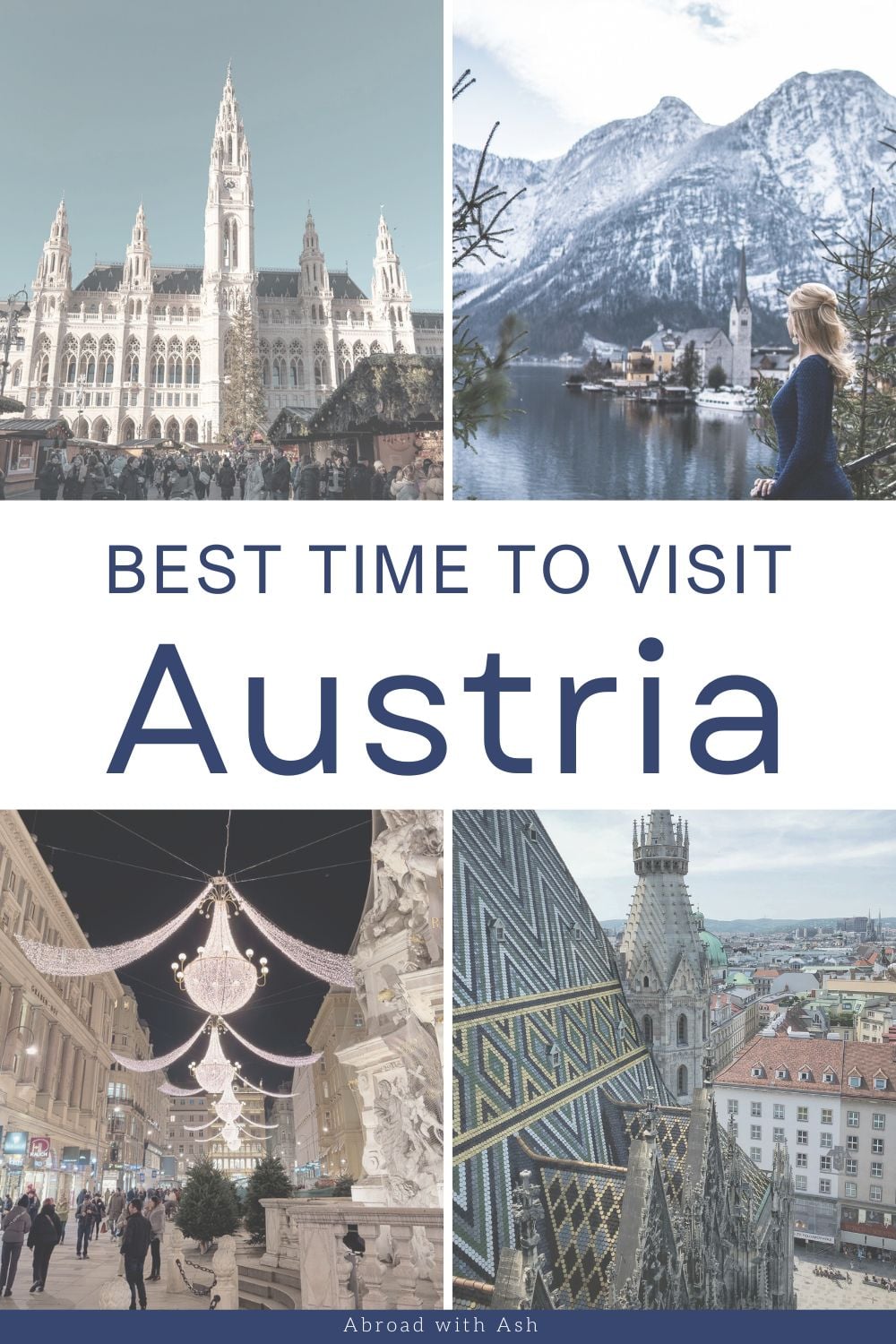
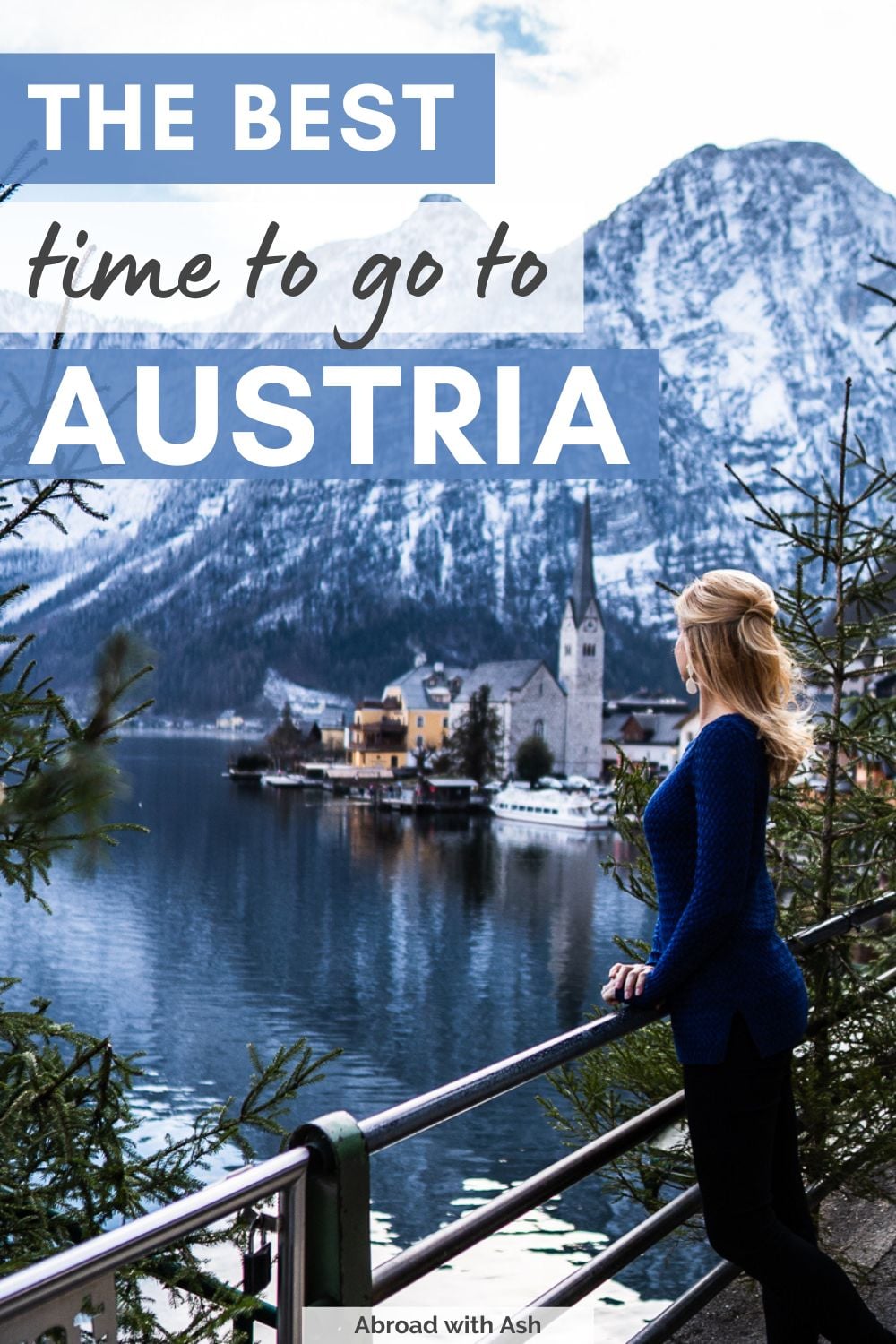
Best Time to Visit Austria – Ideal Seasons and Months

Looking for the best time to visit Austria? Discover the top seasons and months for crowd levels, weather, and events!
Austria…a country famous for The Sound of Music, opera, Mozart, Christmas markets, the Alps, and cafe culture.
Visit the capital of Vienna for a taste of European grandeur with extravagant palaces, opulent cafes, and captivating opera performances.
Head to Salzburg and Hallstatt for picture-perfect scenery and mountainous hikes.
Austria's Tyrol region, bordering Italy, is home to world-class spas amid jaw-dropping scenery.
Whether you prefer city life or a nature escape, Austria is sure to please.
Just like any other popular European destination, when you visit can make or break your trip. Continue reading to discover the best time to visit Austria. I’ll take you through each month and season so you can decide what makes the most sense for your trip.
A quick note before we get started
The average temperatures, daylight hours, and chance of rain are listed for each season and month. I used Vienna as the baseline for weather averages since that's the #1 visited city.
Daylight hours will be fairly the same across the board for Austria.
Salzburg and Innsbruck are similar when it comes to temperature averages (marginally cooler by a few degrees) but will have a higher number of rainy days.
Don't expect snow in the the cities. Vienna, Salzburg, and Innsbruck average a mere 1 to 2 days a month with snow during the coldest months. You'll need to go to the mountains for snow.
If you're headed to the mountains, it will obviously be colder with a higher chance of clouds/precipitation.
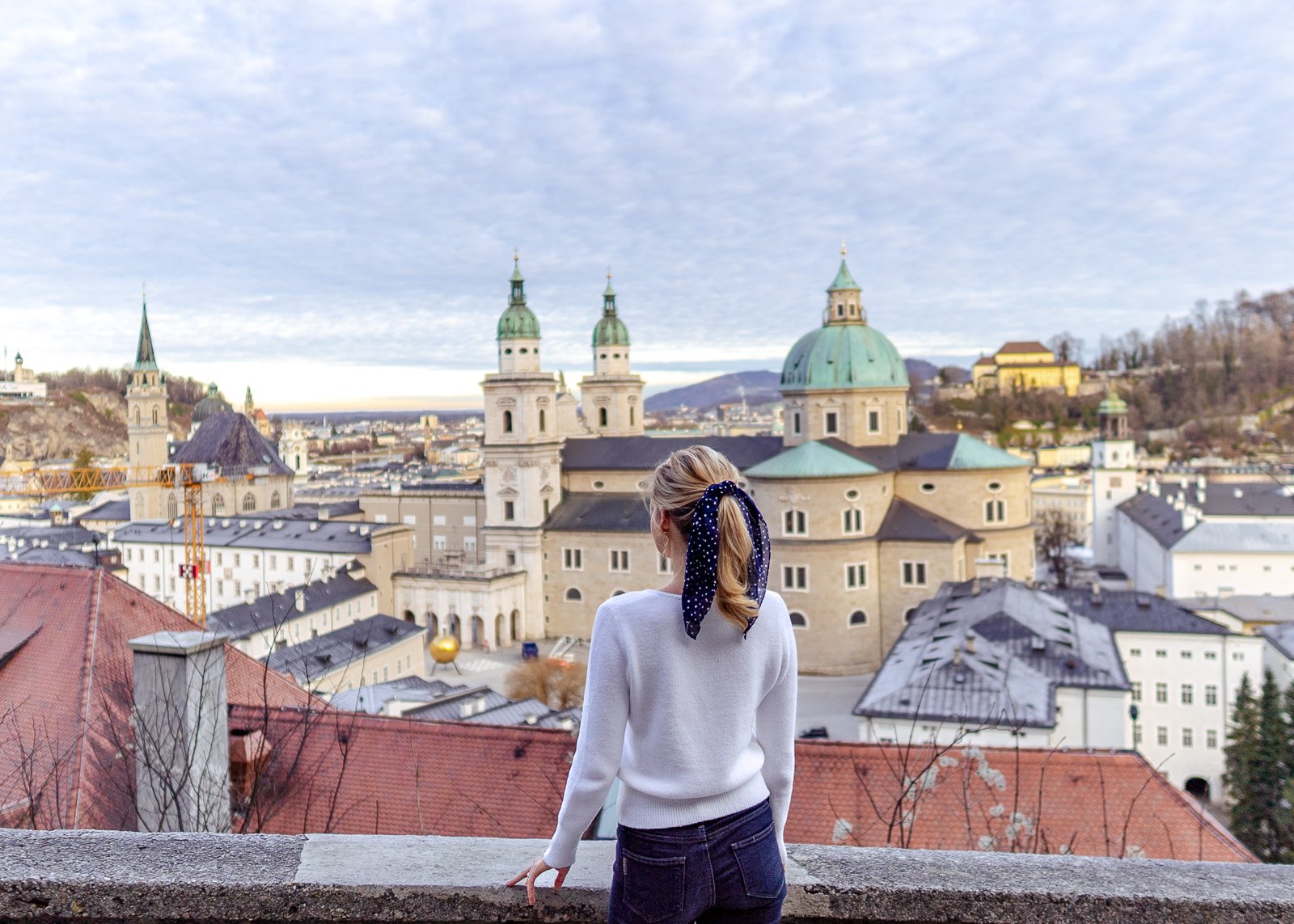
Short and Sweet: THE BEST TIME TO VISIT AUSTRIA IS early Autumn AND late SPRING
Early autumn (mid-September through October) is my favorite time to visit Austria. You don't have to deal with summer crowds and the weather is still pleasant for sightseeing.
Late spring (late-April through May) also offers enjoyable weather with fewer crowds than summer.
Spring and autumn are very similar weather wise for both temperature and chance of rain. A plus for spring is that it has longer daylight hours than fall. Beyond that, it really depends on if you prefer cozy fall colors or springtime blooms for your trip to Austria.
Autumn in Austria – September through November
The best time to visit Austria for colorful scenery, crisp weather, and manageable crowds
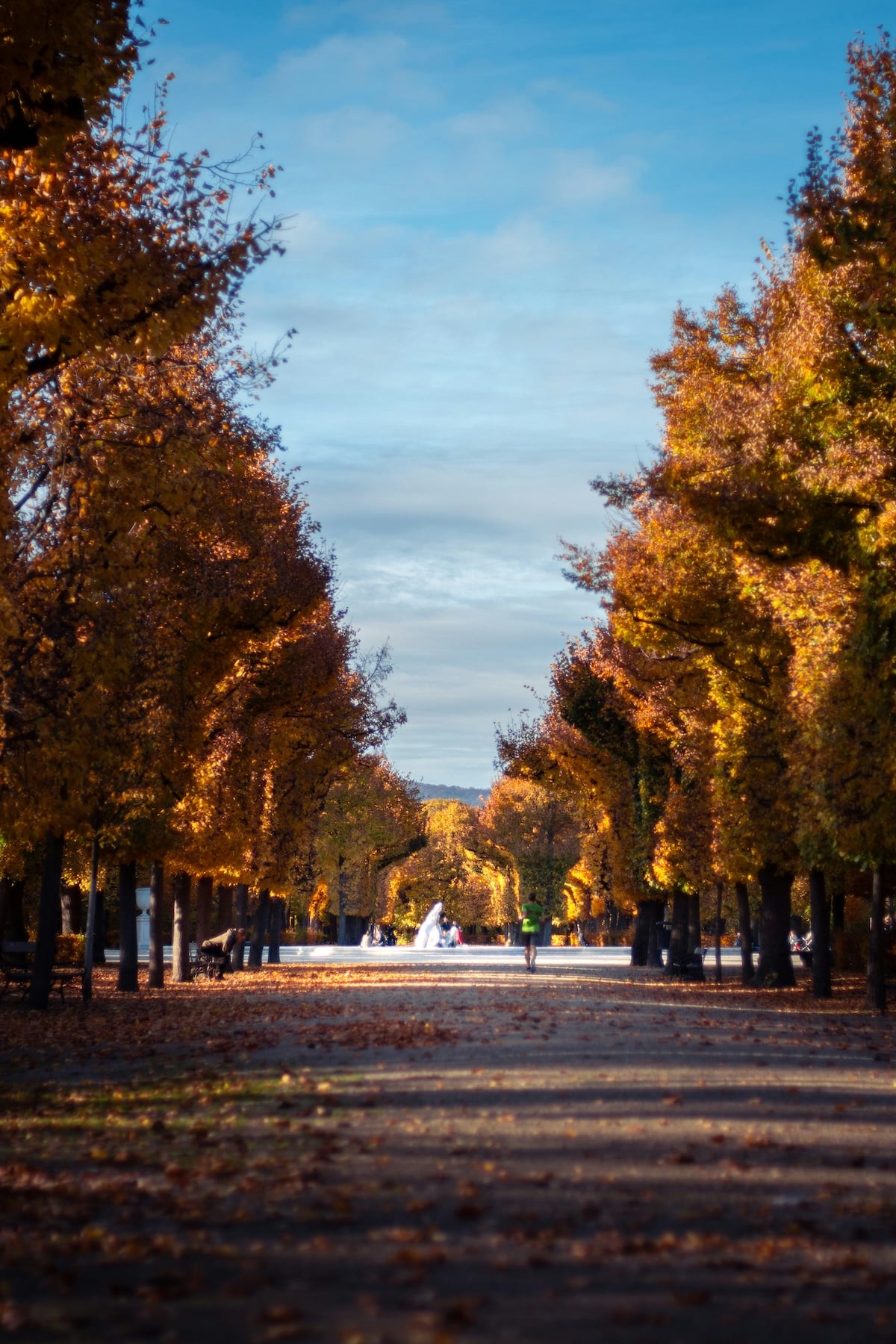
Autumn in Austria is my personal favorite. It’s the sweet spot for good weather and fewer crowds.
Mid-September through October will be ideal for most tourists. You’ll experience the best of fall before it gets too cold and have more daylight hours for sightseeing vs if you visit in November.
While summer brings long days and great weather, it also comes with high crowd levels. September/October offers a slight reprieve once the summer tourists have departed. You’ll have an easier time finding decent hotel rates and getting into tourist sights and popular restaurants.
Consider late fall/November for lower crowds and hotel prices. Late November is a great time to hit the Christmas markets before the crowds descend in December.

Weather averages in autumn
September sees temperatures in the 50s and 60s with an average of 7 rainy days.
October drops to 5/6 rainy days and is 10 degrees cooler but offers an array of colors as the leaves change colors towards the end of the month.
November drops another 10 degrees with lows in the high 30s and highs in the mid-40s. This month has the least amount of rain with an average 4.5 rainy days.
Average number of days with precipitation for Salzburg: September 11, October 9.5, November 9.2.
Average number of days with precipitation for Innsbruck: September 10.8, October 9, November 8.1.
Daylight hours in Autumn
Tourists can fill their itineraries in early autumn since the days are still long. September has about 12.5 hours of daylight, October is around 10.5 hours.
November gets dark early with sunset at 4:30 pm and just above 9 hours of daylight.
Events in autumn
Notable events include Austria’s version of Oktoberfest (Wiener Wiesn-Fest) from late September to mid-October, and Vienna’s Fashion Week in early September.
Wine lovers should note that September and October is peak harvest season in Austria. Many wineries invite guests to participate in the harvest or hike in the vineyards.
Most Christmas markets, like Vienna's infamous Christkindlmarkt, open around mid-November.


Winter in Austria – December through February
The best time to visit Austria for Christmas markets, skiing, and low crowds (after December)
If you’re obsessed with everything Christmas or looking to bring in the new year with a bang, Austria will make for one memorable holiday.
The Christmas markets in Austria are known worldwide as some of the best.
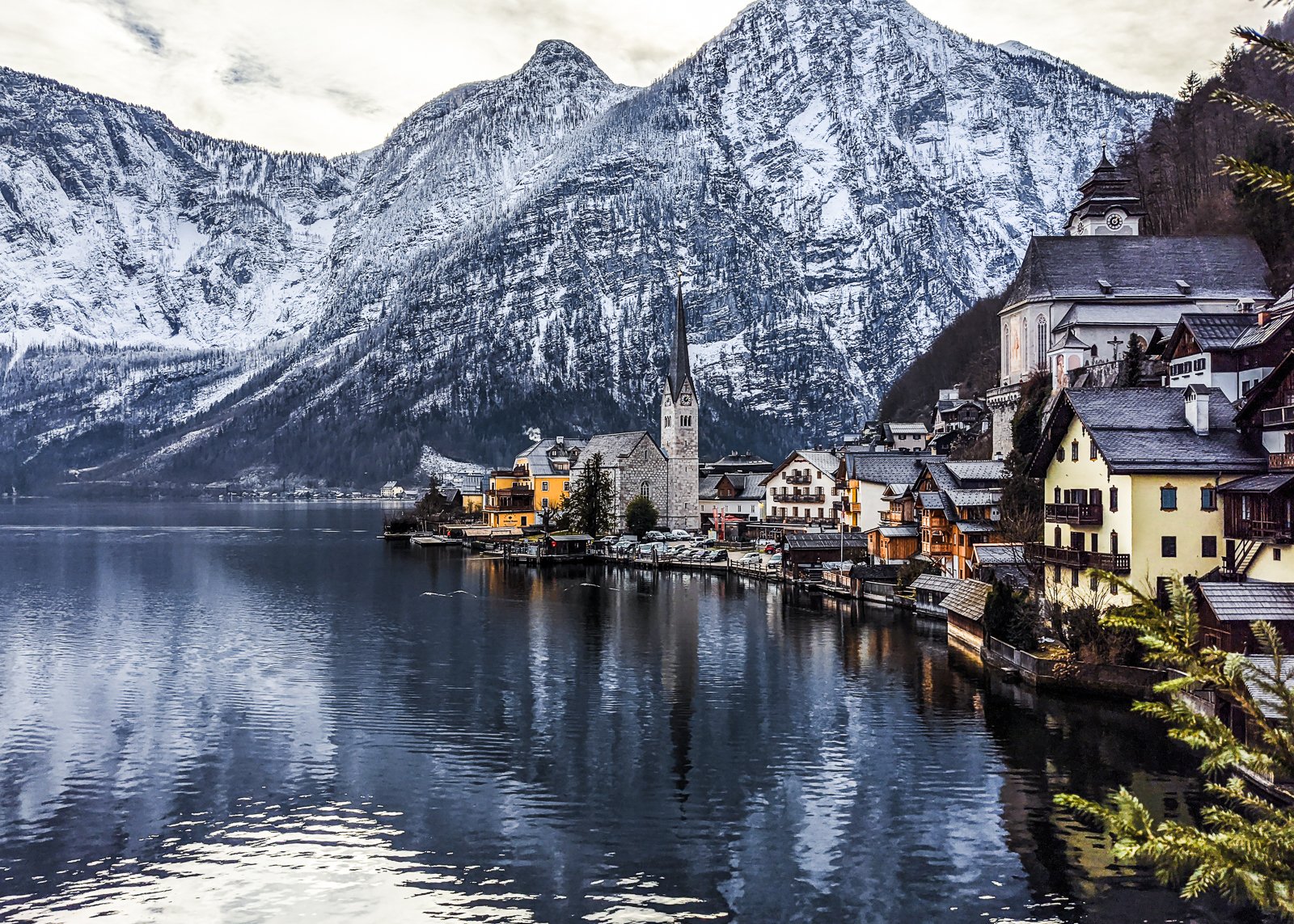
Go big and head to Vienna to choose from over 20 Christmas markets, visit Innsbruck for a fairytale setting beneath the snowcapped mountains, or spend time in enchanting Salzburg for some of the most charming markets and easy access to villages like Hallstatt.


Vienna is one of the most popular places in Europe to celebrate New Year’s Eve, or Silvesterpfad as they call it. The city transforms into a “New Year’s Eve Trail”.
Warm up with mulled wine or cider at one booth, then head to the next stall for some apple strudel, stop at a few of the entertainment areas with music and even waltzing classes, and end the night watching fireworks go off at City Hall as everyone around you performs the waltz (hence the previous waltzing class).
New Year’s Eve in Vienna is basically a city-wide party from 2:00 pm to 2:00 am.
Winter in Austria is also prime ski time. Even if you don’t ski, visiting the Alps during the winter is a cozy experience.
Visit one of the spa towns to take a dip in the thermal mineral pools, try snow shoeing, or just cozy up to the fire with some hot cocoa.
Avoid the month of December if you want to avoid the crowds and high prices.
January or February is ideal since ski season typically runs all the way through March.
If you’re visiting during the holidays book your hotels months in advance. December can be quite crowded since many Europeans come to Austria from neighboring countries to visit the Christmas markets.
Book your restaurant reservations in advance as well.
After the holidays you will find the lowest crowd levels of the year and the hotel prices to match. Surviving the cold, high 20s to high 30s, might be worth it when you have main tourist sights to yourself, rarely see a line, and can pop into many restaurants with no reservation.
Popular cities like Vienna and Salzburg have plenty of indoor activities to keep you busy. See an opera or concert, tour palaces and cathedrals, enjoy a warm coffee with your sacher torte or apple strudel, and take your pick from museums.
There is also something to be said of seeing charming villages and cities like Hallstatt and Innsbruck covered in snow.
Weather averages in winter in Austria
December, January, and February see a temperature range from the high 20s to high 30s.
Winter is the driest month with an average of 4 days with precipitation in December and 3 in both January and February.
Average number of days with precipitation for Salzburg: December 10, January 9.2, February 8.2.
Average number of days with precipitation for Innsbruck: December 7.8, January 7.3, February 6.6.
Daylight hours
Days are very short in winter with 8.4 hours of daylight in December, 8.9 in January, and 10.3 in February. The sun sets around 4 pm in December and January and 5/5:30 pm in February.
Events in Austria in Winter
Christmas markets are the main event of the winter season. Vienna, Salzburg, and Innsbruck are known to have the most elaborate markets, though most cities/towns host some sort of market.
Official Krampus Night is on December 5th. You'll find Krampus runs and parades throughout Austria, but most notably in the Alps region during early December.
Salzburg hosts Mozart Week the last week of January to celebrate the composer's birthday.
Vienna's glamorous ball season starts November 11th and hits its peak during January and February.

Spring in Austria – March through May
The best time to visit Austria for lower crowds and festivals
Along with autumn, spring in Austria is one of the best times to visit. The cooler temperatures mean fewer tourists and better chances of finding a hotel steal.
Visit in March if you're looking to hit the slopes without the winter crowds.
April is nice if you don't mind cooler temperatures (40s and 50s). It's less crowded than May and cheaper.
May is the best for sightseeing with warmer weather (50s to 60s) and longer days.
Weather averages in spring in Austria
March still feels like winter with lows in the mid 30s and highs in the low 50s. There's an average of 5.5 rainy days (with possibly mixed snow).
April bumps up to lows in the 40s, highs in the low 60s, with an average of 6.2 rainy days.
May is the warmest (50s and 60s) but also has the highest chance of rain for spring (8.8 days).
Average number of days with precipitation for Salzburg: March 10.5, April. 10.5, May 13.3.
Average number of days with precipitation for Innsbruck: March 8.8, April. 10.4, May 14.2.
Daylight hours
March has around 12 hours of daylight, 14 for April, and 15.5 for May.
Events in spring
Spring in Austria brings a number of festivals as Austrians are ready to celebrate the warmer weather.
Visit Easter markets in Vienna and Salzburg, get a taste of Austria during the Genuss Festival as you walk through almost 200 stalls in Vienna’s Stadtpark featuring food specialties from around the country, listen to music ranging from Jazz to classical at the Vienna International Music Festival, or burn off those calories at the Vienna City Marathon.
Spring is also a popular time to join bike wine tours of the Wachau Valley.


Summer in Austria – June through August
The best time to visit Austria for outdoor activities and festivals…the worst time to visit Austria for crowds and prices
With sunny days, temperatures in the high 50s to 70s, and long days, come hordes of tourists. Cities like Vienna and Salzburg become overrun and bursting with tourists. Much of the charm is lost with the crowds and advanced reservations for restaurants and sights are a must.
However, visiting in summer does have its perks. If you plan in advance and practice patience with the crowds, the summer months can be quite enjoyable.
Parks are filled with vibrant colors and people lounging, major cities have outdoor events and concerts, and the weather is perfect for outdoor activities like hiking, biking, and swimming.
Visit popular sights and attractions in the mornings and evenings. Save your afternoons (when crowds are the worst) for exploring lesser-known areas or neighborhoods. If you’re in Vienna, escape to a wine garden just outside the main tourist zone.
Jake and I visited Vienna in August a few years back and really enjoyed it. Granted, I had already been to Vienna several times, so we weren’t forced to fight the crowds at popular tourist sights. Instead, we visited wine gardens on the outskirts of Vienna and relaxed at some of the pop-up bars and beaches along the Danube River.
Our favorite evening activity quickly became the Rathaus Film Festival. The square in front of City Hall transformed into an outdoor food market while films were projected on the face of City Hall. Communal-style picnic tables were circled by food stalls offering excellent Austrian and international cuisine.
We planned our days around the crowds. If we wanted to visit a popular café, like Demel, we went first thing in the morning. I made my hotel reservations months in advance and booked dinner reservations a minimum of two weeks out.
If it’s your first time to visit Austria, I wouldn’t recommend summer. You won’t be able to see as many sights because of long lines and crowds. Visit in the early fall or late spring instead.
If you’ve been to Austria before and tourist sights aren’t a priority, summer can be quite enjoyable.

Weather averages in summer in Austria
June, July, and August see lows in the high 50s and highs in the 70s.
Summer brings the highest chance or rain, though it's usually doesn't last long. June has an average of 9.5 rainy days, 9.2 for July, and 8.7 for August.
Average number of days with rain for Salzburg: June 15.5, July 15.3, August 14.1.
Average number of days with rain for Innsbruck: June 16.5, July 15.9, August 14.6.
Daylight hours
June has around 16 hours of daylight, 15.6 for July, and 14.2 for August.
Events in summer
Notable events include the Danube Island Festival (Europe's largest open-air festival) in Vienna, Salzburg Summer Festival, Innsbruck Festival of Early Music, and Bregenzer Festspiele.

In Summary
The first part in planning your next trip begins with when to visit. I hope this guide on the best time to visit Austria helps you decide what month and season works best for you.
Early autumn is my personal favorite with late spring being a close second.
Visit in late November and early December for Christmas markets.
Summer offers ideal weather but brings the highest crowd levels and prices. This is a great time to visit if you're going to lesser-known areas or have already been to Austria before (i.e. you can skip the crowded tourist attractions).
SHARE THE LOVE AND SAVE THIS POST ON PINTEREST!
Best Time to Visit Austria – Ideal Seasons and Months