How to Travel Europe on a Budget | 13 Tips to Save Money While Traveling


Discover 13 tips and tricks on how to travel Europe on a budget. With robust public transportation, low-cost food markets, and affordable activities, exploring Europe on the cheap is easier than you might think! Learn ways to save on your next trip and create a low-cost travel itinerary.
Many people assume that an epic trip to Europe has to be expensive. Nothing could be further from the truth!
All it takes is some pre-planning and a little extra effort to have an amazing vacation while traveling on a budget. A memorable trip does not require you to stay at the nicest hotels or dine at the fanciest restaurants. In fact, I strongly believe traveling that way takes away from having an authentic and unforgettable experience.
Some of my best memories include getting lost on the Tube in London, maneuvering around a hotel room the size of a shoe box, and creating DIY picnic meals in Italy.
These 13 tips are how I've been able to stick to a modest budget while traveling around Europe. Things I've practiced for 15+ years. This is a big reason why I'm able to travel as much as I do. I'm able to stretch what the average person spends on a 7-day trip to 2 or 3 weeks!
Let's dive into how to travel Europe on a budget!

Florence in early December was BLISS! Weather was great, minimal crowds, and cheap hotels.
1. Travel during shoulder season
This is the highest saving tip for how to travel Europe on a budget...and all it involves is rethinking your travel dates!
For those unfamiliar with the term shoulder season, it's a time of year that is not peak tourist season but still offers decent sightseeing weather.
Let’s look at Italy for an example. Italy’s tourist season, or busy season, is late May through October. Shoulder season would be March through early May and late October through early December. These months avoid high tourist season and still offer nice weather and an all-around good experience.
One of the first things I do before booking a trip is to research the best time to visit and overall weather trends. I'll Google "best time to visit X" and read through a few articles. Then I'll cross-reference with weatherspark.com and holiday-weather.com.
I ALWAYS cross-reference because popular websites (ehem travel.usnews.com) have been WAY off. Like saying August is monsoon season in X city when in fact, August sees ZERO rain. So, cross-reference.
There's a reason I've published a number of detailed "best time to visit" posts. It can make or break your trip both experience-wise and budget-wise. My posts go through each month and season and what time of year typically combines lower costs/crowds with decent weather.
I often save 40-60% on hotels by traveling during less popular times.
You may sacrifice the likelihood of “perfect weather”, but in exchange, you're rewarded with fewer crowds, little to no lines, and greater flexibility in your schedule since you aren’t required to book everything in advance.
Choosing to travel during shoulder or low season is one of the best and easiest ways to save money while traveling.
SEE MY OTHER TRAVEL TIPS:
15 TRAVEL MUST-HAVES FOR EVERY TRIP
10 HEALTHY TRAVEL TIPS – STAYING HEALTHY WHILE TRAVELING
BEST WEEKEND GETAWAYS IN THE USA – TOP 10
MOST ROMANTIC CITIES IN THE USA FOR A COUPLES GETAWAY
2. Research your hotel
A lot of my research when planning a trip is spent on the hotel. More than I'd like to admit.
It’s not because I have to stay in the best of the best or the latest and greatest. Those hotels are easy to find...and expensive.
It takes time and effort to find the sweet spot of a great hotel at a mid to low price. I've found some hidden gems on the 10th+ page of TripAdvisor. New hotels that have only a handful of ratings and therefore go overlooked and undervalued.
Take the time to dig through search results...it usually pays off.
Think about your criteria before you begin your hotel search. Decide what you are willing to pay for and what you aren't.
My criteria: a good location, clean, and comfortable. I don't need it to be extra spacious, have laundry service, a gym, a concierge, or in-room dining.
Also, remember that a hotel with a 5-star rating doesn't necessarily mean it's better than a 3-star. You'd be surprised what earns a hotel 5 stars...things that personally don't matter to me, like having slippers and name-brand shampoo.
The hotels I typically book in Europe are 3-star, and they're great!
Consider your priorities and then search thoroughly. I utilize booking sites such as TripAdvisor, Expedia, and Google Maps, among others.
I book most of my hotels through Expedia. I often find they have the lowest price, and I earn rewards through their OneKey Rewards program.
Spending a few more hours researching hotels and saving an average of $50 a night for a 10-day trip can really add up.

How to Travel Europe on a Budget | 13 Tips to Save Money While Traveling
3. Travel with points and take advantage of travel credit cards
I take no shame in playing the travel credit card game to the max. Research which travel rewards card will work best for you, and do not, I repeat, DO NOT use a cash back or any card that does not earn travel benefits. The math never adds up to being in favor of cash back...unless your cash back earning rate is 5% or higher.
I haven't paid for a flight with cash in over 12 years. Typically, your flight is going to be your biggest ticket item. Traveling to Europe on a budget becomes a lot easier if you can nix that cost by using points.

Trevi Fountain, Rome

Piazzale Michelangelo - How to Travel Europe on a Budget | 13 Tips to Save Money While Traveling
4. Don't go crazy with paid tourist attractions
One common mistake travelers make is to fill their itinerary with paid attractions. You may think you've become a pro at traveling on a budget by finding a cheap hotel and paying for your flight with points...but then end up spending insane amounts of money on paid attractions every single day of your trip.
Having a memorable trip to Europe does not mean you need to hit every single, admission-required attraction. I rarely schedule more than two paid attractions/tours each day.
Is going to the Louvre a must when in Paris? Absolutely! Do you need to hit every major museum in Paris? No (unless you're an art junkie).
Often, the most memorable experiences aren't related to a tour or paid tourist attraction; wandering the canals in Venice, watching the sunset from Piazzale Michelangelo in Florence, attending a free flamenco show in Seville, having a picnic at London's Regent's Park, enjoying a €7 glass of wine along the waterfront in Mykonos...I could go on and on.
Instead of paying for 5 walking tours on your next big trip, pick 1 or 2 and create a self-guided walking tour for the rest.
I love utilizing Rick Steve’s audio app for free walking tours (available on IOS and Android devices).
Always Google free attractions offered by a city or ask your hotel. You might be surprised by the offerings or learn that a museum is free on a certain day of the week/month. And voila, Europe travel on a budget just became a lot easier.

Mallorca - How to Travel Europe on a Budget | 13 Tips to Save Money

Seville - How to Travel Europe on a Budget | 13 Tips to Save Money
5. Walk everywhere
Part with the idea that you'll be walking the streets of Paris in your most fashionable shoes. Instead, pack your comfortable walking shoes and get ready to hit the streets.
Walking saves a considerable chunk of your travel budget and burns calories (go ahead and have that extra gelato). It's also one of the best ways to get a feel for the city and the overall layout.
Unlike many cities in the United States and elsewhere around the world, most cities in Europe are a joy to wander and walk.
I rarely walk to places in Dallas. It's quite miserable to be honest, between the blazing heat, crazy car traffic, and streets that are NOT pedestrian-friendly. It's also not very pretty, not to mention I'll look like a lone duck since walking just isn't a popular way to get around.
Not so in Europe! Europe is VERY pedestrian-friendly with many car-free zones. Streets are usually clean, safe, and well-lit. It's also fun because everyone else is walking. It's great people watching.
Between enjoying the sights and architecture, watching the locals go about their day, and window shopping...that 20-minute walk between sights will seem like nothing.
AWA Tip: just look at my Instagram feed (and the pictures below) and you'll see that the Cole Haan Zerogrands are my go-to travel shoes. They're comfortable, lightweight, you can smush them together in your suitcase, are washable, and look good enough that you can wear them with jeans, skirts, dresses, etc.
I also like these APL tennis shoes because they can double as a running shoe.

Empty Tube stations during the pandemic

How to Travel Europe on a Budget | 13 Tips to Save Money
6. Take public transportation
When walking isn’t an option, grab a public transportation map and get comfortable with the system. It may be confusing at first, but trust me, it becomes a breeze once you're past the first few trips.
It always makes me sad when I hear someone went to London and didn’t get on the Tube once! Not only did they spend a small fortune on cab fares, but they missed an experience. You just can’t visit London without hopping on the Tube.

Frites in Belgium - A MUST

Market in Valencia - How to Travel Europe on a Budget
7. Eat at food markets
One of my favorite things when traveling around Europe is hitting up the local food markets. Trendy, posh, basic, simple, indoor, outdoors...most cities have a variety of markets. Some are geared towards tourists (like TimeOut Market) and some towards locals.
Not only is it a great opportunity to try a variety of regional dishes in one place, but makes traveling on a budget in Europe a breeze with cheap prices.

no judging if gelato is your daily lunch
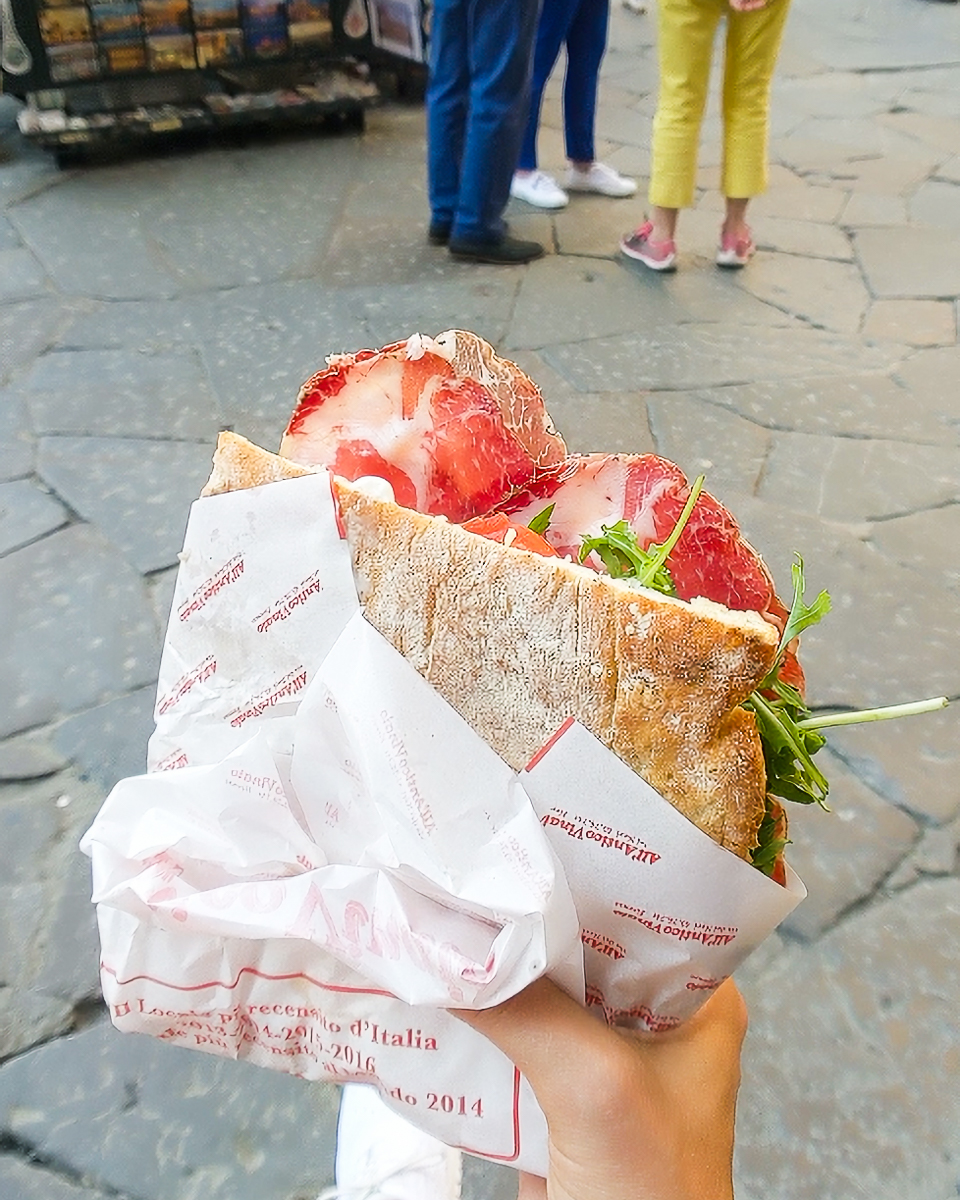
€8 GIANT panino
8. Learn the art of grab-and-go picnics
Grab a baguette from the boulangerie by your hotel, some cheese from the fromagerie, and a sampling of meats from the boucherie. Walk to a nearby park and you’ve got yourself one affordable, memorable, and delicious meal! You are now on your way to becoming a budget travel expert.
If the weather isn’t great, find a grab-and-go type place (these are crazy popular in Europe) and have a quick bite there. Pret a Manger is a great option in the UK. Countries like Spain and Italy have casual cafes on almost every street serving cheap sandwiches and quick bites.
One of my favorite things is to get a panino in Florence and sit in a bustling square like Piazza della Repubblica.
This way of eating (especially in the afternoon) not only saves cash but also precious sightseeing time. I rarely, if ever, sit down at an actual restaurant for lunch. My only true "restaurant meals" are dinner.
9. Do as the locals do
I try to avoid hotels, restaurants, bars, etc., aimed at tourists (and most especially American tourists). Don’t go to the bar at the Four Seasons or The Ritz and drink a €20+ cocktail. Instead, visit the local pub or wine bar for a €5 glass of wine.
I always stick to casual restaurants when traveling solo. Even when I travel with Jake, we rarely go to the ritzy restaurants. Usually, we'll pick one night on a two-week trip to splurge...and that's it.
Not only does it cost a small fortune, but it also makes packing much more of a headache. When you stick to the casual spots, you aren’t forced to pack or waste time changing into fancy restaurant attire.
I also find it’s a lot more fun and easier to make friends when opting for casual restaurants and bars filled with locals and like-minded tourists.


REI packing cubes - How to Travel Europe on a Budget | 13 Tips to Save Money
10. Pack like a pro
Continuing on the thought of skipping fancy restaurants and therefore bypassing the need to pack chic outfits, let’s talk about packing. Overpacking is a pain in the you know what.
Have you tried dragging a heavy suitcase over cobblestones? It's not fun. How about the train stations that don't have elevators or escalators...I guess you'll get a workout by heaving that bag up two flights of stairs.
In the end, you'll probably end up paying for more taxis and Ubers than planned because dragging your luggage around isn't an option.
And don't forget about those pesky luggage fees. They add up quickly and can really put a damper on your day each time you hit the airport. Budget airlines like RyanAir, Volotea, and EasyJet love to charge excessive baggage fees.
Don't get me started on airlines losing checked baggage.
Jake and I rarely check bags. In rarely, I mean MAYBE once a year for winter trips. So the fact that we have had four instances in the last six years where our bag was lost for several days (the entire 2-week trip for Jake's recent experience) says something.
If your bag gets lost, you now have to spend time and money to buy whatever you need until the airline finds and delivers your bag (if ever). Maybe your credit card or airline will cover your costs. Maybe not. In summary, it's seldom worth it to check your bag.
Why fellow travelers feel the need to wear an outfit only once when they travel, I will never understand. I plan on wearing every outfit at least 3 times. Guess how much space 4 outfits take vs. 12...it's a considerable difference.
Don’t pack 14 pairs of socks, underwear, etc. for a two-week trip. Utilize your hotel sink, pack a few laundry detergent sheets (game-changer product), and voila - you just saved some precious luggage space without having to sacrifice one outfit.
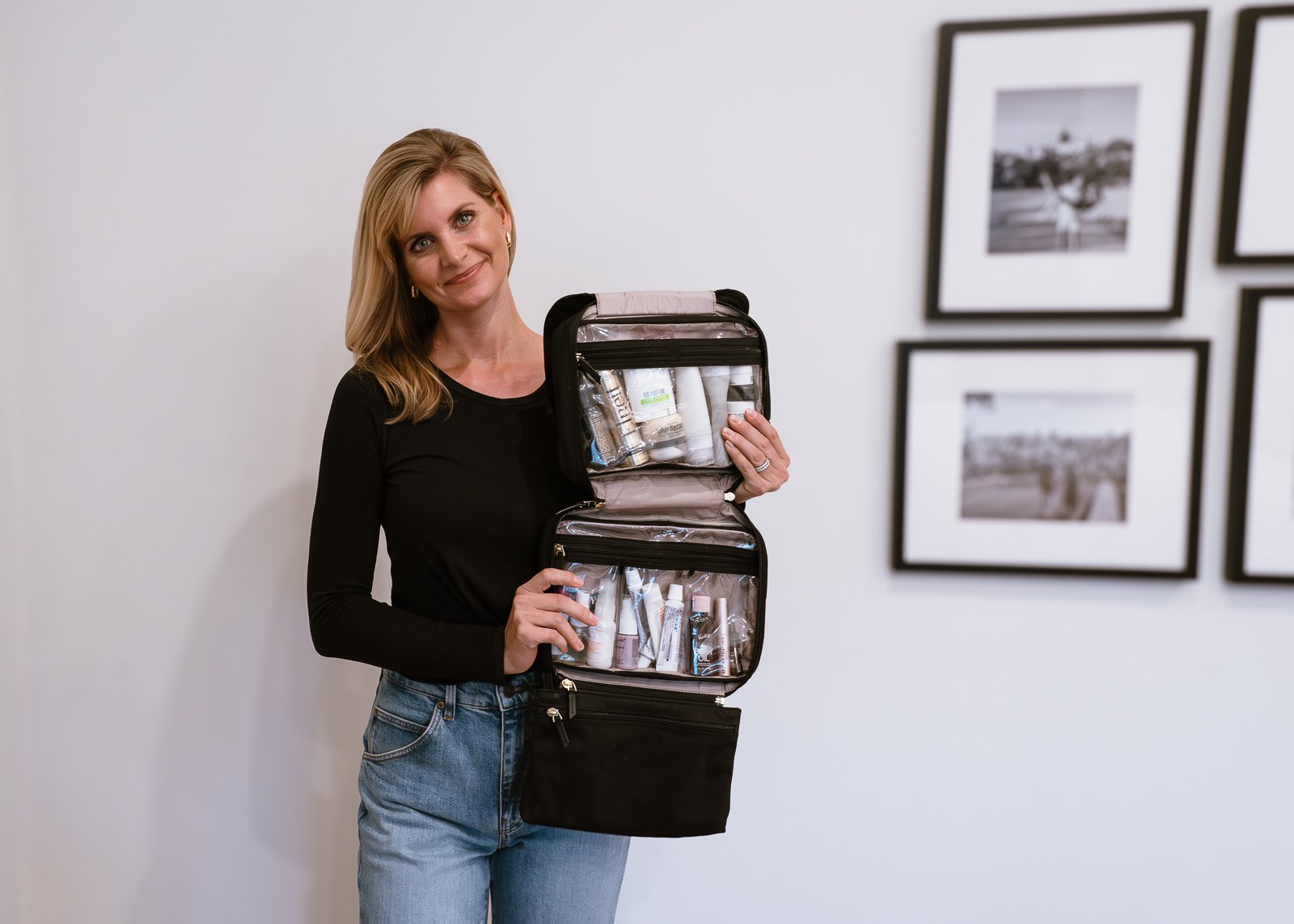
I could go on and on...which is why I dedicated two blog posts on how to pack light: How to Carry On for a 2 Week Trip and How to Size Down your Beauty Bag. These tips and tricks are a lifesaver and make traveling Europe on a budget possible.
If you prefer videos, head to my Instagram profile page and click on the "Packing Tips" highlights reel or visit my YouTube channel. I go through everything I'm packing and how I'm packing for several different trips of varying lengths and weather conditions.
AWA Tip: research luggage policies if you're taking a budget airline between destinations. Your carry-on suitcase may have been allowed on American Airlines, but European budget airlines often have smaller limits and are very strict.
If you think there's a chance you'll have to check your carry-on-sized suitcase, just add a checked back to your ticket when you book. The price is considerably lower than paying at the airport.
11. Researching tipping
Europeans equate Americans with heavy/over-tipping. Why? Because we don't take the time to research tipping etiquette of the country we are visiting.
One time in Greece, I watched a restaurant owner chase a couple out of the restaurant, saying, "you tipped too much". The couple insisted it was fine and they wanted him to have it. As they left, the owner shook his head, almost like the hefty tip was wasteful or an insult.
Now, this isn't often the case, and restaurant staff will gladly take your money. I mention this as food for thought.
In the US, it's customary to tip 15%, 20%, 25%, 28% (the percentage seems to be getting higher and higher these days).
Whereas in Europe, you really only tip at a sit-down restaurant. 10% is very generous and is for outstanding service.
Research tipping policies for the countries you are visiting. You may be surprised to learn that tips are a rarity and extremely low in some places.

Mykonos - How to Travel Europe on a Budget | 13 Tips to Save Money While Traveling
12. Phone plans and data usage
If you travel overseas often, it may make sense to have a phone plan, like Google Fi, that doesn't charge international roaming fees. Otherwise, research your plan and see what the rates are. Some plans charge a flat $10 per day for roaming, while others charge per GB.
Those traveling with a buddy should pick one person in their party to use data (when it's a flat rate), and then you can split the cost.
I try to save my data as much as possible (since I'm on a low-cost plan that isn't unlimited). I pre-download as much as possible over WiFi. Things like my favorite Spotify playlists and offline Google Maps (a must).
When I land overseas, I'll often put the majority of my apps in WiFi only mode. If I'm not traveling solo and with someone else, I'll put my phone on airplane mode.
Many cities in Europe offer free WiFi. If you're worried about security, invest in a VPN like Nord VPN.
If you think you'll need to make phone calls while abroad, look into Viber "out" plans via the Viber app. I always buy the USA Unlimited Viber Out plan ($2.99 for a month).
This allows me to make phone calls to the USA through Viber (the person on the other end needs to have Viber to receive the call). WhatsApp is another option, but you need to be connected to WiFi. With Viber Out, you don't need a WiFi connection.
AWA Tip #1: international e-SIMs are a game-changer for those without an international phone plan. I started using Saily and have LOVED it.
Use code ABROADWITHASH for a 5% discount.
Pick the country you are traveling to and the number of GBs you think you'll need. That's it. Once you activate the e-SIM, your phone is ready to go. I've found my data speed using the e-SIM is faster than when I'm using international data with my phone carrier (Verizon, Spectrum, etc.).
AWA Tip #2: Google allows you to pre-download maps so you can use them later in offline mode. They will be saved as "Offline Maps" under your Google Maps profile. This saves considerable data since you can still get directions to places and see nearby restaurants/coffee shops/etc. Though, you won't be able to browse through reviews or pictures in offline mode.
I've had issues with walking directions not being available with "offline maps". So I'll turn data on to get the walking directions route (shown with the blue dots), then I'll immediately turn data off and just make sure my dot follows the path.

Florence - How to Travel Europe on a Budget | 13 Tips to Save Money While Traveling
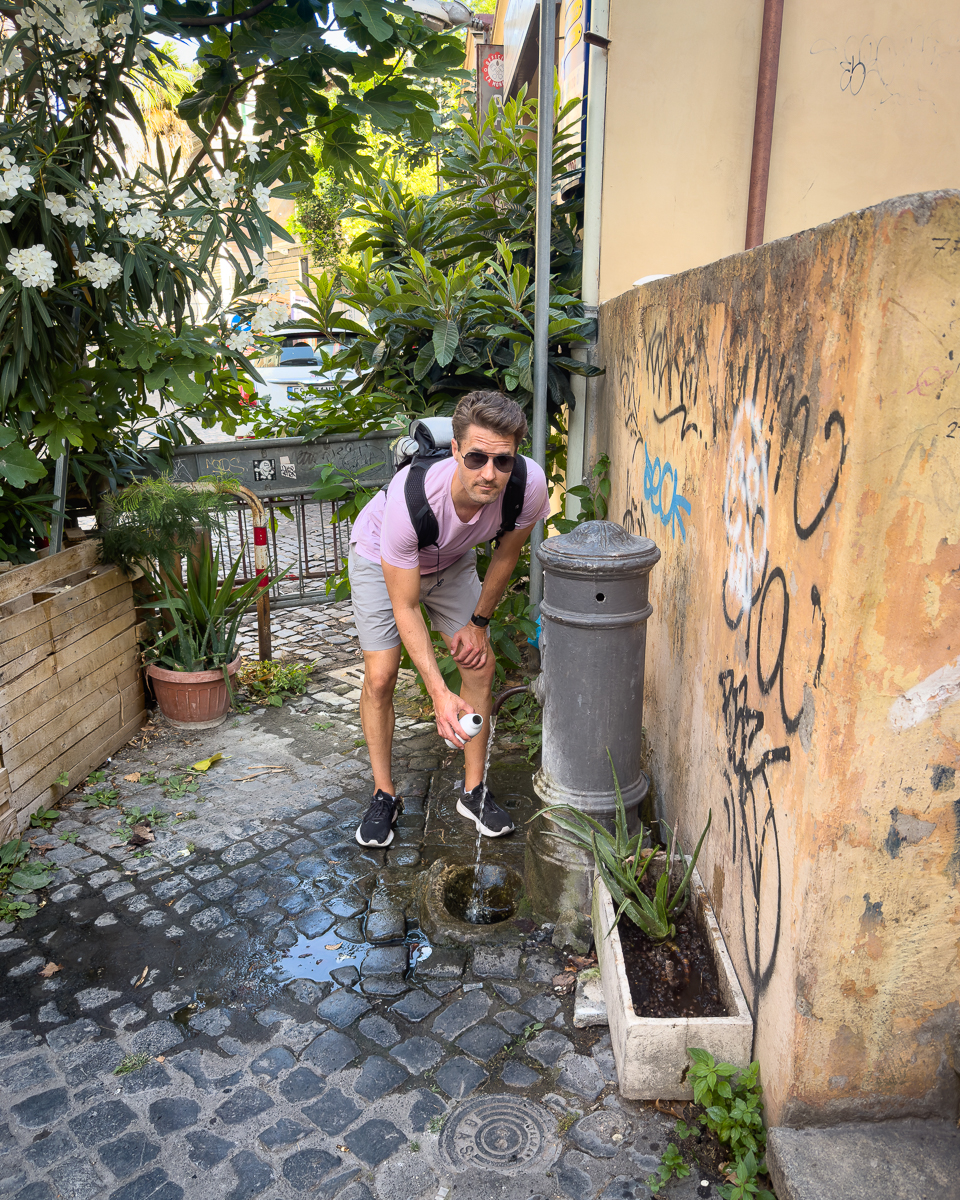
Water fountains are everywhere in Rome
13. Water
This last budget travel tip is easy on the wallet and the planet.
Stop buying plastic water bottles! Bring a water bottle instead.
These are my favorites:
- S'well water bottle - keeps my drink hot (when I make tea) or cold for a full 24 hours. Another perk is that these bottles don't sweat, and therefore, your bag and everything in your bag stays dry. I prefer the 17 oz. size.
- Owala FreeSip - similar to S'well, but easier to drink out of.
- Brita water bottle - great option if you'd like a little extra security with a carbon filter in the straw. This is more for taste and particle removal than actual filtration (i.e., don't rely on this when the drinking water is unsafe).
- For actual water purification, you'll want something like the LARQ Bottle PureVis. This uses a combination of UV-C light inside the bottle and an advanced filter straw.
- The GRAYL GeoPress Water Purifier Bottle is a popular option for hikers and campers since you can purify pretty much any type of water.
Research safe drinking water before you leave. Did you know it's safe to drink the water out of Rome's ancient water fountains? The water is clear, cold, and delicious! There are fountains all over the city.
Venice even has a Google Map you can download with all the drinkable water fountains pinned.
You can find ways around buying plastic water bottles, even if the city doesn't have safe/drinkable water. For example, I'll often fill my water bottles in the hotel gym since there's usually a water purifier there. More and more hotels throughout Europe are adding "water fill stations" on each floor (or at least somewhere in the hotel). This makes stocking up on filtered water a breeze.
Your wallet and the planet will thank you.
A few extra tips on how to travel Europe on a Budget
- when using a credit card, if the machine asks if you want to charge in the local currency, always say YES. You never want to select your home currency; the exchange rate is never in your favor. For example, if you're an American in Italy, you would select the charge to be in Euros, NOT USD.
- the same rule applies to ATM withdrawals: always select the currency of the country you are in.
- some ride share apps, like Uber, have an automatic payment setting where it opts to charge in your home currency. Check the settings in all your ride share apps to make sure "local currency" is selected.
- research your debit card fees for using ATMs abroad. Many banks have partnerships with European banks. For example, Bank of America is partnered with BNP Paribas in France. If you use one of the partner banks, you will not be charged an extra international withdrawal fee. If you travel often, it may be worth it to consider debit cards that reimburse all ATM fees, no matter which bank you use or what country you're in.
- this should go without saying, but make sure you are using a credit card that does not charge international fees.

In summary
With these tips, it's not only possible, but easy, to travel Europe on a budget! Pretty soon, many of these habits will become second nature.
For some destinations, like the United States, it can be difficult to travel on a modest budget. Not so in Europe.
Walkable cities, easy public transportation, awesome hotels priced a fraction of what you would pay in the States, colorful and cheap food markets...if there's a place to stretch your budget (and have an incredible experience), Europe is one of them.
A side perk of practicing the above tips is that you'll have a more authentic experience and a higher likelihood of mixing with the locals!
Share the love and PIN THIS ARTICLE!
Traveling on a Budget | 13 Ways to Save Money






Hi Ashley! I love your blog! I’m so happy for you that you’re doing this. You’ve always been so great at this stuff and had such a passion for travel. 🙂 I know you’ve spent a lot of time in Florence. I’m headed on a girls’ trip to Italy with my mom and sister soon. Wondering if you have any tips on places to eat? Or get gelato? 🙂 🙂 🙂
We will also be in Venice, Positano, and Rome, but I was thinking Florence might be your specialty.
Love you!
Thank you so much for visiting! I absolutely have a list of Florence recommendations, which just happens to be my FAVORITE city! I have a post written but am waiting to publish until I can get some pictures. I’ll send you an email with everything so you don’t have to wait 🙂
what a great blog Ashley! I just got back from Spain and traveled for 11 days with your suggestion of wearing outfits many times over. I took 4 and it was plenty. Only 3 pairs of shoes and one of those were rain booties that I did not need. Great ideas and suggestions and I look forward to many more!!
So glad you are enjoying the blog and I hope you loved your time in Spain!
I like your blog. It’s very up-beat and informative, as well as having great photos.
Keep it up!
I’m so glad you’re enjoying it, thank you!
Hello from Montreal! I came across your blog while preparing a trip to Lisbon and I really like it. Thanks for the tips and itineraries. I love travelling and I will keep following your posts!
That means the world, thank you so much! Glad you’re enjoying the blog and have fun in Lisbon!